
Hiring managers have all types of hiring superstitions and rituals. Some managers only want candidates with a cover letter, while others think educational level means a lot. At the end of the day, do any of these instincts really make a difference?
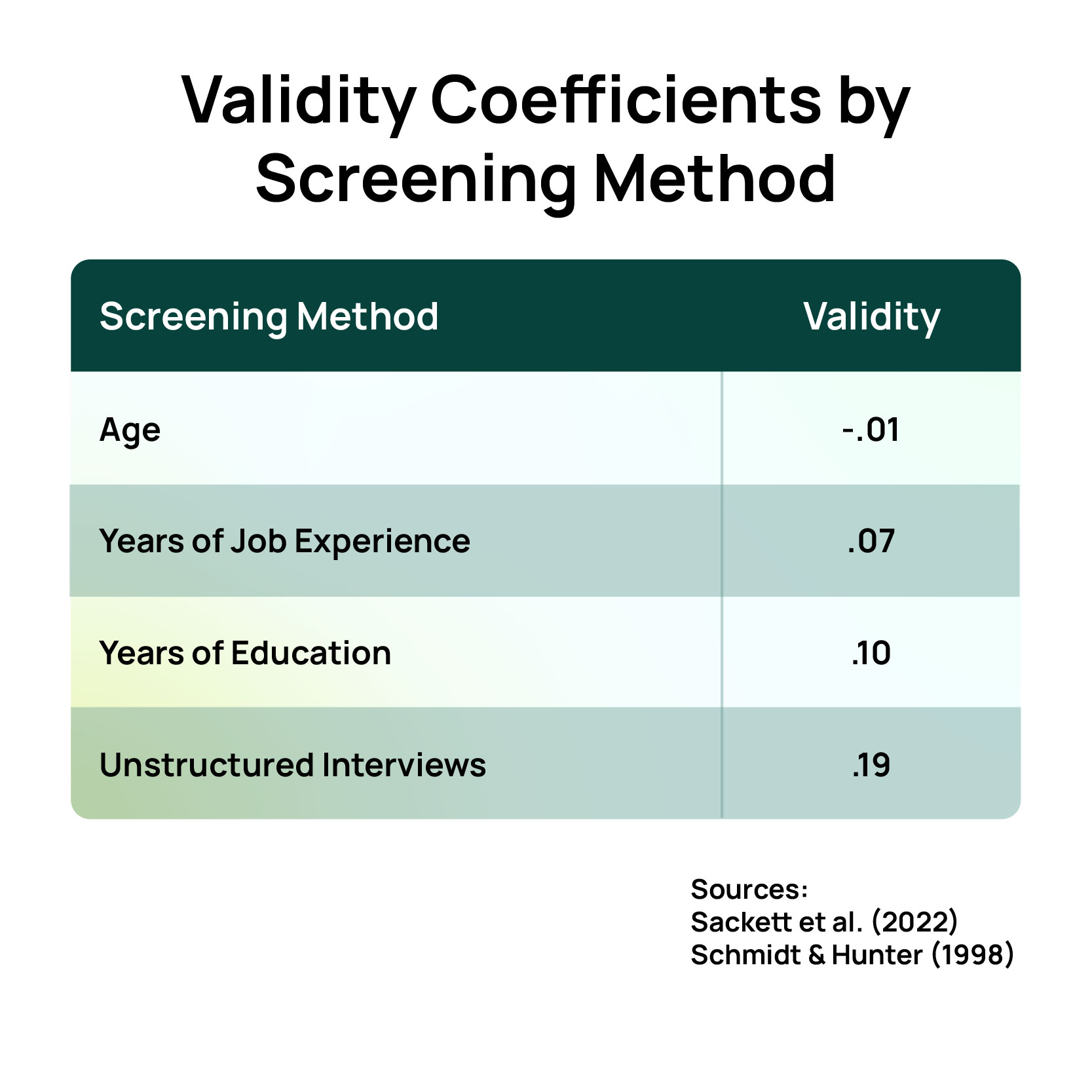
In 2022, a landmark study was released that measured what screening methods actually worked. Surprisingly, there are some methods that managers use that produce terrible predictive results. Here are the worst screening methods.
1. Age
Hiring based on age is illegal. It also happens to be a terrible predictor of job performance, so you can safely and smartly avoid this selection method.
2. Years of Education
For many roles, education is not very relevant. It’s much more effective to gauge a candidate’s skills (learned abilities) against the requirements of the job description.
3. Years of Job Experience
Perhaps shocking to some, the length of time someone has been working doesn’t predict much. This makes sense if you consider that everyone in the workforce (good workers and bad workers) will gain years of experience as they naturally get older. So, for that reason, don’t put too much weight on years of job experience.
4. Unstructured Interviews
Unstructured interviews are called “unstructured” because the interviewer does not plan the course of the interview in advance. One of the most recognizable questions from this type of interview is: “Tell me about yourself.” For many years, unstructured interviews have been recommended for personal counseling. However, in a work interview setting, they are not reliable when comparing different candidates, and results can widely differ between interviewers. Due to the lack of reliability in drawing inferences about candidates, the unstructured interview is a questionable selection tool.
Conclusion
In summary, there is significant research to conclude that some screening methods are clearly not worth your time. If you want some solid suggestions, check out our article on the best screening methods.
About the Author: Jordan Berrier